Oregon Basketball holds a significant place in the history of collegiate sports, not only for its achievements on the court but also for its influence in shaping basketball culture in the Pacific Northwest and across the nation. The University of Oregon, commonly referred to as “Oregon” or “UO,” has a rich basketball tradition that blends athletic excellence, innovation, and a commitment to fostering talent. The Oregon Ducks, the university’s basketball team, compete in the Pac-12 Conference, one of the most competitive conferences in NCAA Division I basketball. Over the decades, the program has experienced remarkable highs, unforgettable seasons, and has produced athletes who have made their mark both nationally and internationally.
Early History and Formation
Basketball arrived at the University of Oregon in the early 1900s, during a period when the sport itself was still evolving in America. The Ducks played their first official game in 1902, just over a decade after Dr. James Naismith invented basketball. In its infancy, the team struggled with limited resources, informal schedules, and minimal public recognition. Despite these challenges, Oregon’s early basketball teams laid the foundation for a culture of perseverance and innovation that continues to define the program today.
During the 1920s and 1930s, the Ducks gradually became more competitive. The program emphasized fundamentals, teamwork, and strategic play, gaining respect in the Northwest region. Even at this early stage, Oregon basketball attracted attention for its disciplined style and focus on both offense and defense. Coaches of this era prioritized not just winning but also developing players’ character and athletic potential, a philosophy that remains central to the team’s ethos.
The Birth of the “Tall Firs”
One of the most iconic chapters in Oregon basketball history occurred in the late 1930s. The 1938–1939 Oregon team earned the nickname “The Tall Firs” due to their height advantage, which was uncommon at the time. Under the guidance of head coach Howard Hobson, the Tall Firs revolutionized the game with their fast-paced offense, precise passing, and strategic use of player height. This team won the first-ever NCAA Men’s Basketball Championship in 1939, defeating Ohio State in the title game.
The victory was historic not only because it marked the first NCAA championship but also because it highlighted Oregon’s innovative approach to basketball. Coach Hobson emphasized speed, ball movement, and teamwork over brute force, concepts that would later influence modern basketball tactics. The success of the Tall Firs established Oregon as a pioneering force in college basketball and set a precedent for future generations of Ducks.
Post-War Era and Growth
Following World War II, Oregon basketball faced the challenge of rebuilding its program. Many college athletes had served in the military, and the sport itself had evolved during the war years. Despite these obstacles, the Ducks remained competitive in the Pacific Coast Conference, which eventually became the Pac-12. Coaches in this era focused on recruiting talented players from the region and refining strategic play, combining traditional fundamentals with emerging basketball trends.
The 1950s and 1960s saw periods of moderate success for Oregon basketball. While the team did not consistently dominate the national stage, it maintained a reputation for disciplined play and talented athletes. During this time, several Oregon players gained recognition for their skills, leadership, and contributions to the sport. The program also benefited from increased funding, improved facilities, and greater public interest, laying the groundwork for future success.
Rise of Modern Era Excellence
The modern era of Oregon basketball began to take shape in the late 20th century. The Ducks experienced a renewed commitment to athletic excellence, recruiting nationally competitive players and embracing modern training techniques. This period was marked by a focus on athleticism, versatility, and strategic innovation. Oregon’s coaches emphasized speed, agility, and three-point shooting, reflecting broader trends in college basketball.
In the early 2000s, the Ducks began to attract more national attention. Under coaches like Ernie Kent, Oregon returned to prominence in the NCAA tournament, reaching multiple Sweet Sixteen appearances and cultivating a reputation for dynamic, high-energy basketball. Players such as Luke Ridnour and Tajuan Porter became household names, demonstrating the program’s ability to develop NBA-caliber talent while maintaining a competitive presence in college basketball.
Notable Players and NBA Alumni
Oregon basketball has produced a number of notable players who have left lasting impacts in college and professional basketball. Many Ducks have transitioned successfully to the NBA, making significant contributions to the sport at the highest level. Some of the most recognized Oregon alumni include:
- Tyrone “T.J.” Hoggard – Known for his versatility and leadership on the court, Hoggard became a cornerstone of Oregon’s resurgence in the early 2000s.
- Luke Ridnour – A skilled point guard with excellent court vision, Ridnour was instrumental in multiple NCAA tournament runs and enjoyed a successful NBA career.
- Aaron Brooks – A dynamic guard with exceptional scoring ability, Brooks helped Oregon achieve tournament success before becoming a standout professional player.
- Dillon Brooks – Recognized for his defensive prowess and intensity, Brooks transitioned from a standout college player into an NBA star.
- Payton Pritchard – A recent standout, Pritchard exemplified leadership, shooting accuracy, and basketball IQ, earning accolades and NBA opportunities.
These players reflect the program’s ability to nurture talent, emphasizing not only skill development but also character, teamwork, and adaptability—qualities essential for success in professional basketball.
Coaching Philosophy and Legacy
Oregon basketball has long been defined by strong coaching leadership. Coaches throughout the program’s history have emphasized a blend of innovation, discipline, and player development. Howard Hobson, the architect of the Tall Firs, remains a symbol of strategic innovation. Later coaches, including Ernie Kent, Dana Altman, and others, built on Hobson’s principles while modernizing offensive schemes, recruiting strategies, and conditioning programs.
Dana Altman, in particular, has been a transformative figure in recent decades. Since taking the helm in 2010, Altman has led the Ducks to multiple NCAA tournament appearances, including Sweet Sixteen and Elite Eight runs. His focus on defensive intensity, team cohesion, and smart offensive execution has solidified Oregon’s status as a nationally competitive program. Altman’s tenure reflects the broader philosophy of Oregon basketball: embrace innovation, prioritize teamwork, and prepare players for the next level.
Rivalries and Conference Play
Rivalries are central to the culture of Oregon basketball. The Ducks’ primary rivalry is with Oregon State, known as the Civil War rivalry, though the game has officially been renamed in recent years. This matchup carries deep historical significance, drawing passionate fans and generating intense competition. Games against UCLA, Arizona, and Washington are also key highlights of the Pac-12 season, often serving as litmus tests for Oregon’s national standing.
Conference play in the Pac-12 has shaped much of Oregon’s competitive identity. Facing consistently strong opponents requires adaptability, depth, and strategic ingenuity. Oregon’s ability to compete at a high level in the Pac-12 has contributed to its national recognition and recruitment success, attracting top-tier talent from across the country.
Facilities and Fan Culture
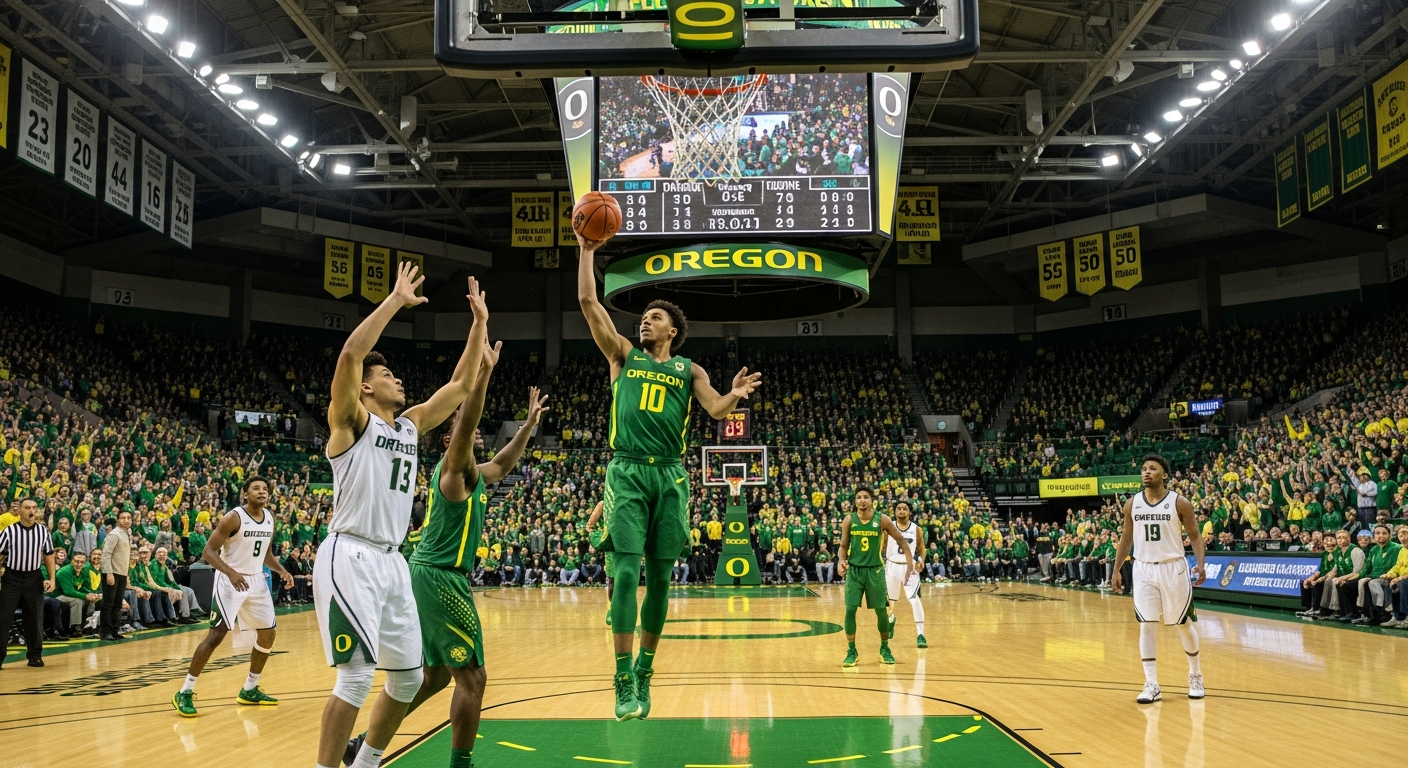
Oregon basketball enjoys a supportive fan base and state-of-the-art facilities. Matthew Knight Arena, located in Eugene, Oregon, serves as the home for the Ducks. The arena is renowned for its modern design, intimate atmosphere, and vibrant fan engagement. Students, alumni, and local supporters create a high-energy environment that provides a significant home-court advantage.
The fan culture surrounding Oregon basketball is also noteworthy. Fans embrace creativity, enthusiasm, and loyalty, often supporting the team with elaborate chants, unique traditions, and colorful displays. This culture fosters a strong connection between players and supporters, reinforcing the sense of community and pride that defines Oregon basketball.
Recruiting and Player Development
Recruiting has become increasingly critical in maintaining Oregon’s competitive edge. The program focuses on identifying high-potential athletes who can excel both on and off the court. Oregon prioritizes players with versatility, strong work ethic, and coachability, emphasizing long-term development rather than short-term success.
Player development programs include advanced training facilities, individualized coaching, nutrition guidance, and academic support. These resources ensure that athletes grow holistically, balancing athletic performance with education and personal growth. This approach has allowed Oregon to attract elite talent while preparing players for professional opportunities and life beyond basketball.
National Recognition and Achievements
Oregon basketball has achieved considerable recognition on the national stage. The 1939 NCAA championship remains a historic milestone, symbolizing the program’s pioneering spirit. More recently, Oregon’s NCAA tournament performances, including deep runs in 2017 and 2019, have solidified the Ducks as a formidable program. Regular-season success in the Pac-12, combined with national rankings, ensures that Oregon basketball maintains visibility and respect in collegiate athletics.
In addition to competitive achievements, Oregon is celebrated for its contributions to basketball strategy, player development, and sportsmanship. The program’s influence extends beyond wins and losses, shaping coaching philosophies and inspiring basketball culture nationwide.
Challenges and Future Prospects
Despite its successes, Oregon basketball faces challenges common to elite programs. Competition for top recruits is fierce, financial pressures demand careful management, and maintaining consistent success in a tough conference is always a complex task. However, the program’s strong leadership, innovative culture, and commitment to player growth position it well for continued excellence.
Looking ahead, Oregon basketball aims to deepen its national impact, secure additional NCAA tournament successes, and continue producing players capable of excelling professionally. The Ducks’ commitment to blending tradition with modern basketball innovation ensures that the program will remain competitive and relevant for decades to come.
Community Impact and Legacy
Oregon basketball is more than just a sports program—it is a community institution. The team engages with local schools, charitable organizations, and youth basketball programs, promoting fitness, education, and leadership. This community engagement reinforces the program’s values, instilling a sense of responsibility and purpose in athletes while inspiring the next generation of basketball players.
The legacy of Oregon basketball is one of resilience, creativity, and dedication. From the Tall Firs’ historic championship to modern Pac-12 successes, the program has continually evolved while maintaining its core principles. Players, coaches, and fans collectively contribute to a culture of excellence, ensuring that Oregon basketball remains a celebrated and influential program in collegiate sports.
Conclusion
Oregon basketball represents a compelling blend of history, innovation, and community. Its journey from early struggles to NCAA champions and modern contenders demonstrates the enduring power of teamwork, strategy, and passion. The Ducks’ legacy is defined not just by victories but by the development of athletes, the embrace of innovation, and the commitment to community engagement. As Oregon basketball looks to the future, it continues to inspire players, fans, and basketball enthusiasts nationwide.
FAQs
Q: When did Oregon basketball win its first NCAA championship?
A: Oregon won its first NCAA championship in 1939, defeating Ohio State. The team was famously known as the “Tall Firs.”
Q: Who is the current head coach of Oregon basketball?
A: Dana Altman is the current head coach, leading the program since 2010.
Q: Where does Oregon basketball play its home games?
A: The Ducks play at Matthew Knight Arena in Eugene, Oregon.
Q: What conference does Oregon basketball compete in?
A: Oregon competes in the Pac-12 Conference.
Q: Name some notable NBA players from Oregon basketball.
A: Notable alumni include Luke Ridnour, Aaron Brooks, Dillon Brooks, and Payton Pritchard.
Q: What is the main rivalry of Oregon basketball?
A: Oregon’s primary rivalry is with Oregon State University, historically referred to as the Civil War rivalry.
Q: What makes Oregon basketball unique?
A: Oregon basketball is known for its innovative strategies, community involvement, player development, and strong fan culture.